Work / Life Balance
Every six months or so, I’d block time on the calendar for a meeting that didn’t look or feel like any other meeting we had. It was just an open conversation with the team about how we wanted to work together.
More specifically, we talked about work/life balance and setting our own boundaries. When were we okay with being contacted? What kinds of pings were fine after hours, and what felt like too much? You know - the things we normally don’t say out loud, but constantly try to guess. At first, this wasn’t an easy conversation for everyone. People didn’t want to reveal too much about how they felt without knowing the boundaries of others.
So, I’d start by sharing my own preferences: “You can message me anytime, just don’t expect a reply at 10 p.m. Even if you get a message from me late at night, it’s because I just remembered something and I’ll forget to send it later. Please do NOT respond until you are back to work.” I’m not sure if those were my exact words, but my team will remember I said something along those lines.
That usually opened the floodgates because people started naming their own boundaries. One person fiercely switched off from work on weekends but loved starting early on Monday to catch up. Another said texts were fine late at night, but emails piling up after hours made them spiral. Someone else just wanted their lunchtime respected - a sacred hour to not be “on.”
Slowly, the room would change, and people would relax. You could feel it. By talking about it out loud, we allowed each other to disconnect and ask for space. It didn’t solve everything, but it made things clearer. Vacations finally became proper vacations where each of us could fully disconnect for a change. Funny enough, I’d like to believe we got better at our jobs because no one was burning energy tiptoeing around each other anymore.
If you’re leading a team and things feel stretched, try having this kind of conversation. These discussions are just as important as strategy sessions. In fact, they’re one of the most powerful lessons we practice in leadership training and team development training: creating psychological safety by making the invisible visible.
We all work better when we stop guessing what’s okay or not, and start saying it. That’s why at Teamwork Unlocked, our leadership escape room training and escape room Singapore workshops are built around creating moments where teams don’t just talk about boundaries and communication - they live them under pressure. The result? Stronger collaboration, less guesswork, and more effective team building.
These are the kinds of insights we unlock in the world’s first B2B escape room training experience created as a leadership training Singapore and team development program.
You might also like reading this:
Sales Systems in The Age of AI
As a startup cofounder, it was interesting to watch the recent selloff in software stocks, driven by the idea that AI is coming for them. Trust me, I get it. When we star...

Career Journey after FAANG
The company cultures of the FAANG companies and those of their generation have changed over the past 1015 years, and we’re seeing veteran employees no longer aligned with...
Effective Sales Techniques
One of my favourite success stories is taking a 50% share of the retail market with zero marketing dollars. When I was the general manager of ANZ for AMD, things were in...
Innovation and Leadership
I’ve seen plenty of wellintentioned leaders who genuinely want innovation, yet they slowly stifle it without realizing they’re doing it. Not because they’re loud (well, s...
Global Work
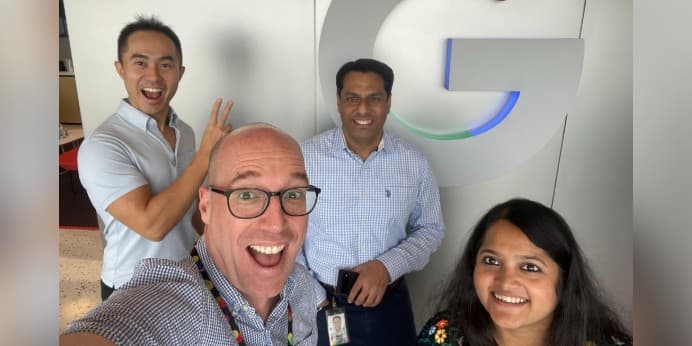
When I look at this photo, it reminds me just how strangely global and wonderfully chaotic my Google years were. This was one of my little leadership cluster: Alfred on t...